
ILT vs VILT: Key Differences and When to Use Each
ILT vs VILT: what VILT training means, how it differs from in-person ILT, the costs, and when to choose each format (with a comparison table).
ILT (instructor-led training) and VILT (virtual instructor-led training) are both live, instructor-led formats; the core difference is where they happen. ILT is traditionally delivered in person in a classroom; VILT is delivered live online over video. Both keep a live instructor and a live cohort, so the real decision isn't which is “better”; it's which fits the content, the audience, and the logistics of a given program.
This is a comparison of the two live formats. If you're weighing live training against pre-recorded, self-paced content instead, see ILT vs self-paced; that's a different question.
How much training is ILT vs VILT?
28% of all training hours are delivered by an instructor in a physical classroom and 24% via virtual classroom or webcast — so roughly half of live training is now virtual, and 52% of all training hours are live and instructor-led. Those figures come from the 2025 Training Industry Report published by Training magazine, which also found classroom ILT rose from 27% to 28% year over year — live, in-person training is not disappearing.
Adoption of VILT specifically is now near-universal but uneven in quality: 98% of organizations use VILT, yet only 21% report the highest levels of success with it, according to The State of Live Virtual Training in 2026, a study of 545 organizations by Class Technologies with Training magazine. The gap is mostly operational rather than pedagogical — scheduling, instructor coordination, and logistics, not teaching quality. More data in our training operations statistics roundup.
Key takeaways
- Same category, different room. ILT and VILT are both synchronous, instructor-led training. VILT is simply ILT delivered online: all VILT is ILT, but not all ILT is VILT.
- VILT wins on reach and cost; ILT wins on hands-on depth. Choose by content and context, not dogma.
- Most programs blend both. In-person ILT for high-stakes, tactile, or relationship-building sessions; VILT for distributed, frequent, or fast-moving topics.
- Operationally they're nearly identical to run, and that's where most providers actually struggle, regardless of format.
ILT vs VILT: the core difference
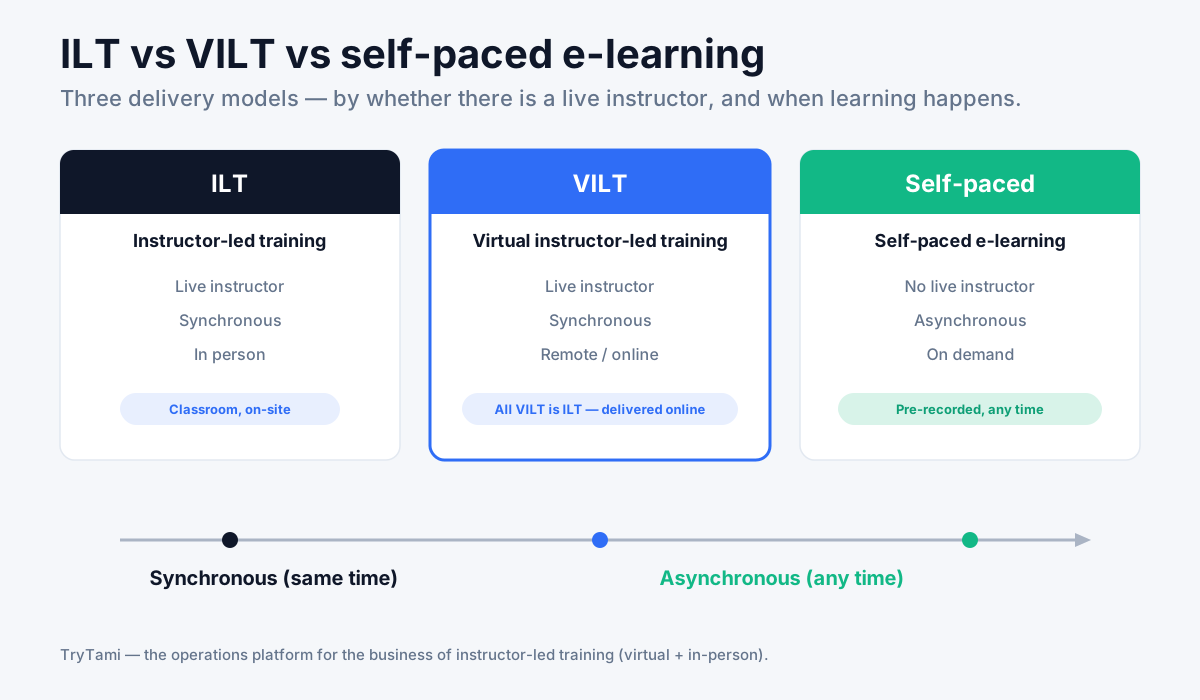
Both ILT and VILT involve a qualified instructor teaching a cohort of learners in real time, with discussion, questions, and adaptation on the fly. The single defining difference is the medium: ILT happens in a physical room; VILT happens in a live virtual room (video conferencing plus interactive tools like polls, breakouts, and chat).
Because they share the same live, cohort-based DNA, VILT is best understood as a subset of ILT (the online version), not a separate category. (Both differ from self-paced e-learning, which removes the live instructor entirely and is asynchronous.)
What is VILT?
VILT (virtual instructor-led training)is live training delivered by a real instructor over video conferencing, in real time, to a cohort of learners. VILT training keeps everything that makes instructor-led training work (discussion, questions, feedback, accountability) and removes the room: sessions run on Zoom, Teams, or similar platforms with interactive tools like breakouts, polls, and shared exercises. It is not the same as recorded e-learning; if there's no live instructor, it isn't VILT. For the delivery side, see our virtual instructor-led training page.
ILT vs VILT comparison
| Dimension | ILT (in person) | VILT (virtual) |
|---|---|---|
| Location | Physical classroom or client site | Live online (Zoom, Teams, etc.) |
| Instructor & cohort | Live, in the room | Live, on video |
| Synchronous? | Yes | Yes |
| Travel & venue cost | High (travel, venue, per-diems) | Low to none |
| Geographic reach | Limited by location | Global; any time zone |
| Hands-on / tactile work | Strongest (equipment, physical practice) | Possible but constrained |
| Scheduling flexibility | Lower (rooms, travel days) | Higher (more cohorts, faster) |
| Engagement risk | Lower (in-room presence) | Higher if poorly designed (screen fatigue) |
| Best for | High-stakes, tactile, relationship-heavy programs | Distributed teams, frequent or fast-changing topics |
When to use ILT (in person)
In-person ILT is the right call when physical presence materially changes the outcome:
- Hands-on or equipment-based training: lab work, manufacturing, medical, trades, anything tactile.
- High-stakes or sensitive content: executive leadership, team offsites, sensitive change management where the room matters.
- Relationship and trust building: kickoffs, onboarding cohorts that benefit from in-person rapport.
- Environments with poor connectivity or strict security that limit virtual tools.
The trade-off is cost and reach: travel, venues, and per-diems add up, and you're limited to who can physically attend.
When to use VILT (virtual)
Virtual instructor-led training is the right call when reach, frequency, and cost-efficiency matter:
- Distributed or global audiences: train five regions without five trips.
- Frequent or recurring programs: run more cohorts in less time without travel days.
- Fast-moving content (software, compliance updates, AI tools) where you need to deploy quickly.
- Cost-sensitive delivery: preserve live interactivity while cutting travel and venue spend.
The trade-off is engagement: VILT only matches the classroom when it's designed for virtual: short segments, frequent interaction, and strong facilitation. Done badly, it becomes a webinar nobody attends.
Most programs blend both
In practice, the ILT-vs-VILT choice is rarely either/or. Most modern programs use blended learning: in-person ILT for the high-stakes or hands-on sessions, VILT for the distributed and recurring ones, and self-paced content for foundational knowledge. The format follows the objective.
The part that's the same either way: operations
Here's what providers discover quickly: whether a session is in person or virtual, the operational work is nearly identical, and it's where most of the pain lives. You still have to match a qualified instructor, schedule across availability and time zones, manage registration and rosters, handle reschedules, capture attendance, and report on what was delivered.
That's why the format debate matters less than it seems. A training operation that can run both ILT and VILT from one system, with scheduling, instructor matching, attendance, and reporting as connected records, can choose the right format per program without multiplying the back-office work.
What about ILT vs self-paced learning?
That's a different comparison: live instruction versus asynchronous, pre-recorded content. See our ILT vs self-paced guide for that decision.
Written by Dave Murphy. TryTami is training management software for instructor-led and blended programs. Choosing a platform? Start with our guide to the best training management software in 2026.
See what this looks like without the spreadsheet.
TryTami runs the scheduling, instructors, and logistics behind instructor-led training — automatically.
Frequently asked questions
What is the difference between ILT and VILT?
ILT (instructor-led training) is live training led by an instructor, traditionally in person. VILT (virtual instructor-led training) is the same live format delivered online over video. The difference is the medium. All VILT is ILT, but not all ILT is VILT.
What percentage of training is ILT vs VILT?
28% of all training hours are delivered by an instructor in a physical classroom and 24% via virtual classroom or webcast, per Training magazine's 2025 Industry Report — meaning 52% of training hours are live and instructor-led, and roughly half of that live delivery is now virtual. Classroom ILT rose from 27% to 28% year over year.
How many companies use virtual instructor-led training?
98% of organizations use VILT, but only 21% report the highest levels of success with it, according to a 2026 study of 545 organizations by Class Technologies with Training magazine. The shortfall is largely operational — scheduling, instructor coordination, and logistics — rather than a problem with teaching quality.
Is VILT as effective as in-person ILT?
For many learning goals, yes, when designed for virtual delivery. VILT keeps the live instructor and cohort, so the difference between effective and ineffective VILT is design, not technology. In-person ILT still has an edge for hands-on, tactile, or relationship-heavy training.
Is VILT the same as a webinar?
No. A webinar is a one-to-many broadcast. VILT is interactive instructor-led training with a live cohort: discussion, breakouts, and real-time feedback.
When should I choose ILT over VILT?
Choose in-person ILT when physical presence changes the outcome: hands-on or equipment-based training, high-stakes or sensitive content, and relationship-building sessions. Choose VILT for distributed audiences, frequent or fast-moving programs, and cost-sensitive delivery.
What about ILT vs self-paced learning?
That is a different comparison: live instruction versus asynchronous, pre-recorded content. See the ILT vs self-paced guide for that decision.
Keep reading
Virtual instructor-led training
Go deeper on the platform built for this.
The Best AI Training Programs for Teams (With Examples)
How to evaluate AI training for employees: what good corporate AI training programs include, and real examples of programs that work for teams.
Why Corporate Training Is Broken (and How to Fix It)
A founder's take on why corporate training is broken (academic content, weak measurement, and spreadsheet operations), and the model that fixes it.
Cut the busywork. Grow your training business.
TryTami is the training management software that automates the coordination behind instructor-led training. Request a 30-minute demo with the founders.