Virtual Instructor-Led Training (VILT)
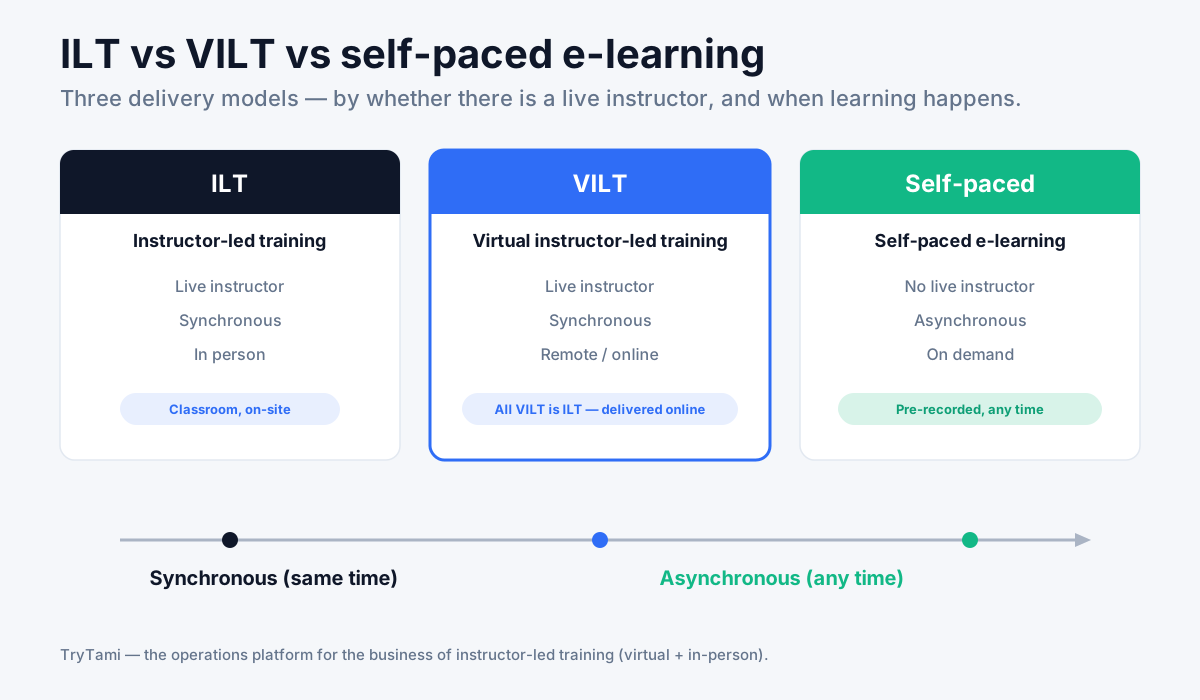
Virtual instructor-led training (VILT) is a live, real-time training format where an instructor delivers content to learners through a virtual platform. Unlike pre-recorded courses or self-paced modules, VILT sessions happen synchronously — everyone logs in at the same time, participates in discussions, and works through exercises together, just like a physical classroom.
For training companies, corporate L&D teams, and ILT providers moving operations online, VILT has become essential. It preserves the engagement and interactivity of in-person instruction while eliminating travel costs and geographic constraints.
VILT combines the structure of traditional instructor-led training with the accessibility of digital delivery. A qualified instructor leads the session live using video conferencing, screen sharing, virtual whiteboards, and collaboration tools.
Key characteristics of VILT:
VILT is not the same as watching a recorded webinar or completing an online course at your own pace. The defining feature is live human instruction with real-time interaction.
VILT eliminates travel, venue rental, printed materials, and catering costs. For organizations running multi-location training programs, the savings are substantial. A training company delivering 50 sessions per year across 10 cities can cut logistics costs by 60-80% by shifting to VILT.
Instructors can train learners across time zones and countries without leaving their office. This is especially valuable for global organizations that need consistent training delivery across regions.
Without the constraint of physical classroom availability, VILT sessions can be scheduled more frequently and in shorter blocks. Instead of a full-day on-site session, you can run three 90-minute virtual sessions across a week — which research shows improves knowledge retention.
Unlike self-paced eLearning, VILT keeps learners accountable. They show up at a set time, interact with the instructor and peers, and participate in activities. Completion rates for VILT consistently outperform self-paced courses.
Instructors can update slides, exercises, and materials between sessions without reprinting or redistributing physical content. This makes VILT ideal for fast-moving topics like technology, compliance updates, or product training.
| Factor | VILT | In-Person ILT |
|---|---|---|
| Cost per session | Low (no travel/venue) | High (travel, venue, catering) |
| Learner reach | Global | Limited by location |
| Engagement level | High (with good facilitation) | Highest (physical presence) |
| Hands-on practice | Limited (virtual labs, simulations) | Full (physical equipment, demos) |
| Scheduling | Flexible, shorter blocks | Requires block scheduling |
| Networking | Limited | Strong (in-person interaction) |
| Technology dependency | High | Low |
| Scalability | High | Low |
Neither format is universally better. The right choice depends on the content, audience, and learning objectives.
VILT works best for:
VILT is less ideal for:
The biggest mistake training providers make is taking a 6-hour classroom course and delivering it over Zoom. Virtual attention spans are shorter. Redesign content into 60-90 minute modules with frequent interaction points.
Use polls, chat prompts, breakout rooms, and direct questions to keep learners engaged. A good rule: no more than 10 minutes of straight lecture before an interaction point.
Small group exercises in breakout rooms replicate the table discussions and group work from physical classrooms. Assign clear tasks with time limits.
Share readings, videos, or exercises before the session. This lets you spend live time on discussion and application rather than information transfer.
Recordings are useful for learners who miss a session or want to review, but they should supplement — not replace — live attendance.
Facilitating virtually is a different skill than classroom instruction. Train your instructors on virtual platform features, engagement techniques, and how to read a virtual room.
A solid VILT setup requires:
The last point is often overlooked. As VILT programs scale, manually managing calendars, sending invites, tracking completions, and generating reports becomes unsustainable. A training management system (TMS) like Tami automates this operational layer so your team can focus on delivering great training.
Most modern training programs don't rely on a single format. Blended learning combines VILT with self-paced content, in-person sessions, and on-the-job practice.
A common blended model:
This approach gives you the best of both worlds: the flexibility of self-paced learning with the engagement and accountability of live instruction.
Running 5 VILT sessions a month is manageable with spreadsheets and calendar invites. Running 50+ sessions across multiple instructors, time zones, and client organizations is not.
Common operational challenges at scale:
This is where training operations software becomes critical. Tami is built specifically for ILT and VILT providers who need to manage the logistics of live training — scheduling, enrollment, instructor management, and reporting — without drowning in spreadsheets.
Learn how Tami streamlines VILT operations →
Delivering training through a screen requires a different skill set than standing in front of a classroom. The best virtual instructors adapt their techniques to the medium rather than simply replicating their in-person approach.
Attention spans are shorter in virtual environments. Break content into 10-15 minute segments with interactive activities between each segment. Use polls, chat prompts, breakout rooms, and collaborative whiteboards to keep participants actively engaged. A well-designed 90-minute VILT session should have at least 6-8 interaction points — roughly one every 10-12 minutes.
Technical fluency builds instructor credibility and prevents session disruptions. Virtual instructors should be proficient with their platform's features: screen sharing, breakout rooms, annotation tools, polls, recording, and chat management. Run a tech check 15 minutes before every session. Have a backup plan for common failures — a secondary device, a phone dial-in option, and pre-shared materials that participants can access if the connection drops.
In a physical classroom, instructors use body language, movement, and eye contact to engage learners. In VILT, this translates to camera presence. Keep your camera on and positioned at eye level. Use direct eye contact (looking at the camera, not the screen), varied vocal tone, and deliberate pauses. Address participants by name frequently. These small techniques create the sense of personal connection that makes VILT feel like a live experience rather than a webinar.
Without physical cues, it is harder to gauge whether participants are following along. Build in frequent comprehension checks — direct questions, quick polls, or chat-based responses. For larger groups (15+ participants), assign a co-facilitator to monitor the chat, manage technical issues, and track participation while the lead instructor focuses on content delivery.
Running sessions that are too long. Four-hour virtual sessions create fatigue and disengagement. If your content requires a full day, split it into two or three shorter sessions across multiple days. Participants retain more, and scheduling becomes easier for everyone involved.
Treating VILT like a webinar. Webinars are one-to-many broadcasts. VILT is interactive, instructor-led learning. If participants are muted the entire time and only listening, you are running a webinar — and losing the primary advantage of the VILT format. Design every session with at least 40% of the time dedicated to participant interaction, practice, and discussion.
Ignoring the technology learning curve. Not all participants are comfortable with virtual meeting tools. Provide a brief platform orientation at the start of each program (not just each session). Show participants how to use chat, raise hands, join breakout rooms, and access shared materials. Two minutes of setup prevents 20 minutes of disruption.
Skipping the post-session follow-up. VILT sessions should not end when the video call ends. Send a follow-up within 24 hours that includes session recordings, key takeaways, any materials shared during the session, and action items or assignments for the next session. This reinforces learning and maintains momentum between sessions.
Not tracking the right data. Attendance alone does not measure VILT effectiveness. Track engagement metrics (poll responses, chat activity, breakout room participation), assessment scores, learner satisfaction ratings, and — where possible — post-training behavior change. A training management system can automate much of this data collection and reporting.
VILT has become the standard format for remote and hybrid onboarding programs. New hires can meet their team, ask questions in real time, and participate in interactive exercises — all without traveling to a central office. The most effective onboarding VILT programs combine live sessions with self-paced modules: use VILT for culture, relationship-building, and complex topics that benefit from discussion, and eLearning for policy reviews and system training.
Regulated industries need documented proof that employees completed specific training with a qualified instructor. VILT satisfies this requirement while eliminating the logistics of gathering employees in one location. Session recordings provide an audit trail, and attendance tracking through a TMS platform creates the compliance documentation that auditors require.
Sales teams are naturally distributed, making VILT the logical choice for product launches, competitive positioning, objection handling, and methodology training. Role-playing exercises translate well to breakout rooms, where pairs can practice pitches and receive instructor feedback. The key is keeping sessions short (60-90 minutes) and tightly focused on immediately applicable skills.
Software training, coding workshops, and technical certification programs work well in VILT format when combined with hands-on lab environments. Participants share screens to demonstrate their work, instructors provide real-time troubleshooting, and the session can be recorded for later reference. For complex technical content, shorter sessions (60-90 minutes) delivered over multiple days outperform marathon sessions.
Leadership programs benefit from the cohort experience that VILT enables. Participants from different locations and business units can come together for facilitated discussions, case study analysis, and peer coaching exercises. The virtual format also makes it easier to bring in guest speakers, executives, and subject matter experts who would be difficult to schedule for in-person events.
For highly interactive sessions, 8-15 participants is optimal. This allows everyone to participate actively in discussions and exercises. For less interactive, presentation-heavy sessions, groups of 20-30 can work with good facilitation. Beyond 30, consider adding a co-facilitator or splitting into multiple sessions to maintain engagement quality.
VILT and in-person ILT share the same core advantage: live, synchronous instruction with real-time interaction. The key differences are logistical. VILT eliminates travel costs and geographic barriers, offers more scheduling flexibility, and scales more easily. In-person ILT provides stronger networking opportunities, better hands-on practice for physical skills, and fewer technology distractions. Many organizations use both formats strategically based on content type and audience needs.
The best platform depends on your specific requirements. Zoom, Microsoft Teams, and Webex are the most common choices, each with strengths in different areas. More important than the platform is how you use it — breakout rooms, polling, screen sharing, and collaborative tools matter more than the brand name. Ensure whatever platform you choose integrates with your training management software so sessions can be automatically scheduled and attendance tracked without manual effort.
For most organizations, no. Some training scenarios — hands-on equipment operation, physical skills development, high-stakes team exercises — still benefit from in-person delivery. The trend is toward a blended approach where VILT handles the majority of training delivery (especially knowledge transfer and discussion-based learning) while in-person sessions are reserved for content that genuinely requires physical presence. Understanding the differences between training management tools helps organizations plan this blended strategy effectively.