Virtual instructor-led training (VILT), run at scale.
VILT is the modern format for ILT, live, remote, cohort-based. Done well, it's classroom-quality without the travel. Done badly, it's a webinar nobody attends.
What is virtual instructor-led training (VILT)?
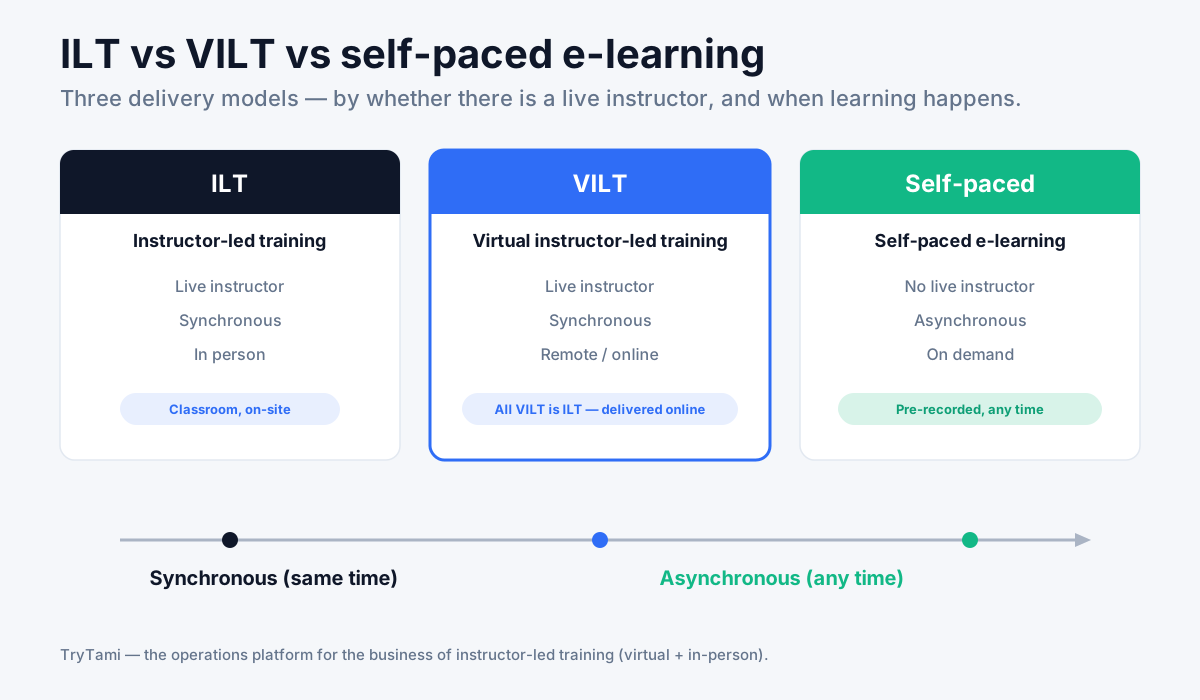
Virtual instructor-led training (VILT) is live training delivered remotely over video, same live cohort dynamics as classroom training, without the travel. Distinct from self-paced e-learning because there's a live instructor and live cohort interaction.
VILT became dominant during 2020-2022 and has stuck because it's faster to schedule, cheaper to run, and easier to scale than classroom delivery. In 2026 it's near-universal — 98% of organizations use it and 40% run at least half their programs virtually — yet only 21% rate their VILT 'very successful', and the gap is almost entirely operational, not instructional (Training magazine & Class, 2026). For a deeper side-by-side of the two live formats, see the ILT vs VILT comparison.
What VILT scheduling needs
Run virtual instructor-led training that actually works.
Multi-timezone scheduling
Coordinate live sessions across regions without manual time conversion.
Live cohort tracking
Track attendance, participation, and engagement per session, not just registration.
Calendar integrations
Two-way sync with Google + Outlook so trainer availability is always current.
AI instructor matching
Match VILT sessions to instructors qualified for the topic, language, and time zone.
Per-cohort evaluations
Capture post-session feedback and roll up scores by cohort, instructor, region.
Public + private VILT in one catalog
Run open-enrollment VILT and dedicated client engagements in the same calendar.
| Dimension | ILT (in person) | VILT (virtual) | Self-paced |
|---|---|---|---|
| Live instructor | Yes | Yes | No |
| Synchronous (same time) | Yes | Yes | No |
| Location | In person | Live online | Anywhere, any time |
| Travel & venue cost | High | Low | None |
| Geographic reach | Local | Global | Global |
| Hands-on / tactile work | Strongest | Constrained | Limited |
See VILT scheduling that doesn't break.
Why do most VILT programs underperform?
Despite near-universal adoption, only 21% of organizations rate their VILT programs 'very successful' (Training magazine & Class, 2026). The friction is almost entirely operational — scheduling and allocating trainers, managing registration across time zones, tool sprawl during delivery, and confirming attendance, certificates, and billing afterward — not the quality of instruction.
None of those are classroom problems; they're fixable without changing what instructors do in the session. The fix is running scheduling, instructor matching, registration, attendance, and reporting as connected records in one system, so adding session volume doesn't add proportional admin.
Best practices
How to deliver VILT at scale.
Design for interaction, not presentation
Short segments, frequent engagement, polls, and scenario-based activities — not a lecture.
Train instructors for virtual facilitation
It's a distinct skill from in-person teaching, and the biggest driver of whether VILT lands.
Prioritize audio quality
Participants leave when they can't hear; audio matters more than video.
Use a producer or co-host
Let someone manage the tech so the instructor can focus on teaching.
Automate scheduling & instructor matching
So session volume doesn't add proportional coordination work.
Offer self-service registration
That flows straight into your records instead of a separate spreadsheet.
Capture attendance & issue certificates automatically
No manual reconciliation after every cohort.
Connect delivery, reporting & billing
One source of truth, with real-time visibility into capacity and profitability.
Maturity model
Is your operation ready to scale VILT?
The strategic question isn't whether you're good at virtual delivery — it's whether your operation can absorb more of it without breaking.
Level 1 — Held together by people
Operations live in a spreadsheet, a calendar, an inbox, and someone's memory. Growth means hiring, and every reschedule is a small fire.
Level 2 — Stitched together by tools
Point solutions that don't talk to each other. Your team moves data between systems instead of selling and delivering.
Level 3 — Run on a system of record
Courses, instructors, clients, sessions, and revenue are connected records in one platform. Adding volume doesn't add proportional admin, and capacity, utilization, and revenue are visible in real time.
Frequently asked questions
What does VILT stand for?
VILT stands for virtual instructor-led training — live, real-time training delivered online by an instructor, as opposed to pre-recorded, self-paced e-learning.
Is VILT the same as a webinar?
No. A webinar is one-to-many broadcast. VILT is interactive instructor-led training with live cohort dynamics — discussion, breakouts, and real-time feedback.
What is the difference between ILT and VILT?
ILT (instructor-led training) is any training led by a live instructor, traditionally in person. VILT is ILT delivered online. All VILT is ILT, but not all ILT is VILT.
What's the difference between VILT and self-paced learning?
VILT has a live instructor and a live cohort (synchronous). Self-paced e-learning is asynchronous, individual, and pre-recorded.
Is virtual instructor-led training effective?
Yes. In the 2026 Training magazine/Class study, 79% of organizations reported at least moderate success with VILT, though only 21% rated their programs very successful — a gap driven mostly by operational challenges, not teaching quality.
How do training companies scale VILT?
By automating the operational work around each session — scheduling, instructor matching, registration, attendance, certificates, and billing — on one connected platform, so adding session volume doesn't require adding coordinators.
People also ask
What's the difference between ILT and VILT?
Both are live, instructor-led — ILT in person, VILT online. Same cohort dynamics, different medium.
ILT vs VILT →What's the difference between VILT and self-paced learning?
VILT has a live instructor and cohort. Self-paced is asynchronous individual learning.
ILT vs self-paced →See how TryTami runs your training operation.
Book a 30-minute demo with the founders. No slides, just the platform.
Not ready for a demo?
Read the TryTami blog
Insights on running and growing a training business — instructor-led training, L&D operations, and the systems behind high-performing programs.